


Our Services




Student Visa Requirements & Rules
An Australian student visa allows international students to study & work in Australia for the duration of their course, or package of courses. Being enrolled to study in Australia is not a guarantee that you will be granted your student visa.
To apply for the student visa, you must be fully enrolled in your course(s) and have a Confirmation of Enrolment (CoE) for each one (ie. 1 for English + 1 for the bachelor).
When assessing your student visa application, the Department of Home Affairs will decide whether or not you are a good candidate for the student visa.
How do they do this? There is a list of requirements that you must demonstrate, the most important of these is being the Genuine Temporary Entrant (GTE) criteria. This basically means that you are coming to Australia to study your course, and will be returning to your home country, or another country, at the end of your student visa.
Of course, many international students will be eligible to apply for another visa at the end of their studies (such as the Temporary Graduate Visa). However, for the purpose of the student visa, the sole purpose of coming to Australia is to study.
English language requirements
When you come to study and train at TAFE Queensland, your classes, training and assessments will be in English, so it’s important to understand the minimum
English language requirements before you apply.
There is a minimum level of English language skills that are required to study at TAFE Queensland for international students who do not speak English as their first language which is as follows:
Certificate III*, Certificate IV, Diploma* and Advanced Diploma:
International English Language Testing System (IELTS) Academic: Overall 6.0 (with no individual band less than 5.5)
Associate degree level courses: International English Language Testing System (IELTS) Academic: Overall 6.0 (Writing 6.0, all other skills no less than 5.5)
Bachelor level courses:
International English Language Testing System (IELTS) Academic: Overall 6.5 (with no score lower than 6.0)
* Please note: some courses may require higher or lower IELTS (Academic) than the minimum of IELTS 6.0 and/or include specific sub-score requirements.
Please check the relevant course brochure for full details on the English language entry requirements for your

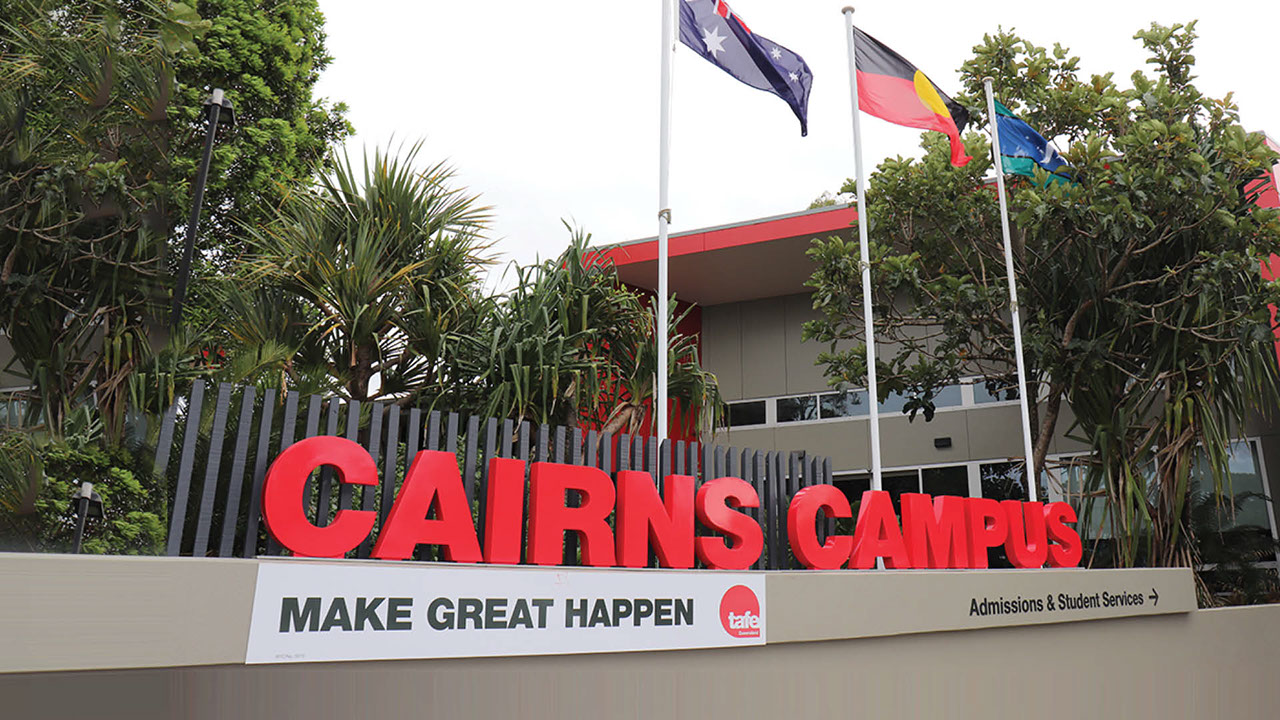
Academic Requirements – International Students _ TAFE Queensland
For TAFE Queensland, international students need specific academic and English entry requirements, generally requiring an equivalent of Australian Year 10 for Certificate III and Year 12 for Diploma/Advanced Diploma, plus English scores like IELTS 5.5 (no band below 5.0) for Certs/Diplomas or IELTS 6.5 (no band below 6.0) for higher education, with pathways available if you don’t meet the standards directly. Always check the specific course page for exact requirements, including documentation like certified transcripts and passport copies, and be aware of age (minimum 17/18) and welfare rules
Certificate IV in Aged Care leads on to more salary and responsibility in the workplace
If after qualification s are met and the training completed a sponsorship has not been not offered , do a precognition of prior learning test then apply for a skilled work visa 482 , this another pathway leads into residency in Australia.
The next level of study is the Certificate IV in Aging Support, which can open up doors as an aged-care worker, client care advisor, community-care worker, coordinator, care-services team leader, or aged-care activity worker.
The course is generally 6 to 9 months long. The cost of tuition will vary from $6,000-$10,000, depending on the duration and education provider.
In the course, you will learn topics including:
- empowering older people
- intervening for older people at risk
- supporting people who live with dementia
- planning and implementing individual services
- fostering relationship families and carers
- working with diversity
- legal and ethical compliance
- using a palliative approach in delivering services
- developing networks
- creating collaborative partnerships
- understanding healthy body systems
- facilitating safe work practices
- assisting clients with their medication
- strategies to prevent falls
- working with people who have mental health issues
Can I get Permanent Residency through the Aged-Care Industry Labour Agreement?
In May 2023, the Australian government released the Aged Care Industry Labour Agreement to deal with the shortage of workers in the industry. Be very careful when making a study decision based on this situation.
Many students are now enrolling in aged-care & disability courses hoping the qualification will serve as pathway to permanent residency through sponsorship. Thus, the competition will be increasing, making it harder to secure a sponsorship.
According to the Australian newspaper, as of Jan 5, 2024 only 155 people have been granted a visa through this program.
As of June 2024, 2% of centres had signed up to the agreement. Unless centres participate in the agreement, that sponsorship pathway is not available to its employees. Getting sponsored requires employees to be extremely good at their job. Aged care work is demanding; you have to be a very special person to be good at it.


Bachelor of Nursing Science (Pre-Registration)
At James Cook University and under the sub class student visa you can work up to 28 hours in Paid work while you study
Rankings 2025 445 World Ranking
- Location: Cairns campus, 14-88 McGregor Road, Cairns, Queensland 4878, Australia
- Annual Fee: AUD $ 35,480.00
- Duration: 3 years (156 Weeks)
- Start Date: February 2025
- Study Mode: Full time
Meet Study in regional Australia*:
- Pathway to a 485 Visa*: Up to 2 Years[For Hong Kong and British National Overseas passport holders: Up to 5 Years ]
- Admission Requirments: Students are required to complete academic qualification of Australia grade 12 or equivalent. Entry requirements may vary from country to country.
- Course pre-requisites: English (Units 3/4,C). Recommended: Biology, Chemistry and one of General Maths, Mathematical Methods, or Specialists Maths (Units 3/4,C).
Students are encouraged to undertake the Tertiary Access Course or the Health major in the Diploma of Higher Education if they have not studied recently and/or want assistance making the transition to University studies.
IELTS – 7.0 (no component lower than 7.0); TOEFL (internet based) – 94 (23 in Speaking, 24 in Listening and Reading, and 27 in Writing); Pearson (PTE Academic) – 65 (no component less than 65).
Diploma of Early Child hood Education
This to is studied at a Vocational Education and Training {VET} level. However,it is also available as a Higher Education Diploma,which is more expensive.
The certificate 111 is a prerequisite to be allowed to take the Diploma.Most international students study both courses ,as the diploma is considered the industry standard in addition, attaining a diploma after a minimum of 92 weeks of study could result in the Temporary Graduate 485visa{Graduate Work Stream} for the role of Childcare Care Center Manager.
Each course is 1 year long,The average price for the 2 year combined qualification at the VET level is around $18 to $20 thousand dollars
The diploma course on its own is around $25 to $30 thousand dollars
Potential roles when you complete the course
- Early childhood Educator
- Family day care co coordinator
- Team Leader
The average salary for educators who hold a diploma is approximately $1,800 a week, based on government-monitored award wages.
If you hold a diploma you will receive a 1.5 years of study for a Bachelor degree.


Certificate III in Early Childhood Education & Care Start your career with this 1-year entry-level teaching qualification
Certificate III in Early Childhood is an entry course to help you gain a position in a Childhood center.
Certificate III in Early Childhood Education & Care
This entry-level course is studied at the Vocational Education and Training (VET) level.
Potential roles:
- Early Childhood Educator
- Early Childhood Assistant Educator
- Family Day Care Educator
- After- Hours Care Educator
The average hourly wage for educators with the Certificate III is approximately $23/hour.
This course is an entry level course to advance your degrees for advancement in early Childhood education
Plumbers are very needed in Australia
Study Plumbing A Certificate III in Plumbing makes you a Plumber (General)
This courses will be added shortly


Placing Ceramic Tiles, Tiling and repairs
Study Tiling A Certificate III in Wall & Flooring & Tiling makes you a Wall & Floor Tiler
Study a Certificate III in Wall & Floor Tiling
A Certificate III in Floor & Wall Tiling offers students the opportunity to gain an industry-recognized qualification in this specialised trade. With comprehensive course content, students will have the skills and knowledge to install ceramic, porcelain, and stone tiles in both residential and commercial environments.
Upon successful completion, graduates will be qualified to find employment as a Floor and Wall Tiler. According to seek.com.au, in 2023 tiles earn an average of $AUD 60,000-$70,000 per year, and job growth in tiling for the next 5 years is projected to be -3.4%.
Tiler’s courses for Australian international students range from $AUD 22,000-$AUD 30,000, depending on the college and your location. Colleges allow students to pay their tuition in installments, and a work placement of 360 hours is often included in the training package.If you’d like to learn more about becoming a tiler, please get in touch.
What will I learn in the Certificate III in Wall & Floor Tiling?
These are the fundamentals of what you study in the program:
- applying basic leveling procedures
- measuring and calculating
- reading and interpreting plans and specifications
- handling tiling materials
- preparing surfaces for tiling
- using floor tiling tools and equipment
- installing floor and wall tiles
- repairing tiles
- installing mosaic & decorative tiles
- applying tiles to curved surfaces
- waterproofing preparation
- work health & safety procedures
- planning and organising work
- conducting workplace communication
- sustainability in the workplace
Most international student tiling courses include a 360-hour work placement, the opportunity to gain hand-on experience ‘on the job’. This is also a requirement of the 485 Graduate Work Stream Visa.
From domestic housing tiling to large projects in large construction projects, tilers are wanted everywhere and they can demand a high salary for large projects often earning over $100000, hundred thousand dollars per year.
Carpentry and Flooring Trades are needed in Australia
Study an Australian Certificate III in Carpentry
In our office in Tan Binh we have a training room where i teach you about Australian culture and values plus some videos on the Australian way of life.
One of the more popular trades, according to seek.com.au, in 2024, carpenters earn an average of $AUD $65,000 to $85,000 per year.
The Certificate III in Carpentry is a Vocational Education & Training (VET) course taught in Australia to both international and domestic students. The course will provide students with the technological knowledge and practical skills to work as a carpenter.
Carpentry is one of the most popular and versatile trade courses for student visa holders. In Australia carpenters are often referred to as Chippies (because of the wood chips). Carpentry is required both indoors and outdoors, on old buildings and new buildings, in furniture making, cabinetry, and flooring. Carpenters are responsible for the construction, installation and upkeep of frameworks and buildings using wood and often other materials. Carpenters are even required in the construction of bridges and freeways.
International students can study Certificate III in Carpentry, but can also continue into the Certificate IV in Carpentry. However, most students complete the Certificate III, and as long as they have met the Australian study requirement, are eligible to apply for the graduate visa to start gaining valuable Australian work experience as a carpenter.
Note: International students are not eligible to study as an apprentice. That is for domestic students only (permanent residents and citizens).
Carpentry courses for Australian international students range from $AUD 22,000-$AUD 30,000, depending on the city and institution. Colleges allow students to pay their tuition in instalments, and a work placement of 360 hours is often included in the training package.
What will I learn in the Certificate III in Carpentry?
These are the fundamentals of what you study in the program:
- Using carpentry equipment & tools, including hand & power tools, and safety gear such as helmets.
- Understanding building materials, including wood, composite woods, and metals, and knowing when they are the best choice for each project.
- Construction techniques for the different parts of a building project, like framing, flooring, and roofing.
- Drawing and specification training teaches the reading and interpretation of construction drawings and specifications, needed for any project.
- Safety Training ensures carpenters are aware of hazards on site and how to prevent accidents.
Estimation skills ensure budget, material & labour costs and costs and project timing are well through and presented for any job.
Australian building code training ensures that all work complies with legal requirements and laws.
Most international student carpentry courses include a 360-hour work placement, the opportunity to gain hand-on experience ‘on the tools’. This is also a requirement of the 485 Graduate Work Stream Visa.
Once a graduate holds the certificate III, they can seek work as a carpenter, contractor, or even a supervisor in the Australian


Painting and Decorating courses in Australia
Study Painting & Decorating A Certificate III in Painting & Decorating makes you a Painting Trade Worker
Do you have an artistic flair? The Certificate III in Painting & Decorating could be the perfect course for you. Qualifying you as a Painting Trades Worker, painters can work in a domestic or commercial setting painters, apply paint, wallpaper & other materials to interior and exterior surfaces. The course also trains students to use scaffolding, work with colours, and understand related materials. Whether you want to paint giant buildings, or create a perfect interior as a designer, there are many opportunities with this qualification.
According to seek.com.au, in 2024 painters earn an average of $AUD 70,000 – $85,000 per year (or $35 to $45 per hour), and there is a +2.9% projection for job growth over the next 5 years.
The Certificate III in Painting & Decorating is generally one of the most affordable trade courses to study on a student visa. Depending on the city, you can expect the tuition to be between AUD$18,000-$22,000 for a 2-year program. Tuition is paid in installments, generally monthly or every three months. These courses have regular intakes so you can jump into a program most months, depending on the institution.
As this course can currently result in a 485 Graduate Visa – Post-Vocational Education Work Stream as a Painting Trades Worker. Graduates have the opportunity to gain valuable work experience in the Australian building industry.
What will I learn in the Certificate III in Painting & Decorating?
These are the fundamentals the course:
Understanding colour theory is an overview of the principles of colour. This includes primary/ secondary/ tertiary/ complimentary/ analogous colours, understanding warm and cool colours and tones, colour harmony, value, and saturation. A painter learns how colours interact and how to use them for various effects.
Preparing surfaces includes cleaning, sanding, and priming.
Painting techniques including using rollers paintbrushes and sprays on various surfaces both indoors and outdoors.
Wallpaper application involves the removal and installation of wallpaper.
Decorative finishes include texture coating, marbling effects, and faux paint techniques.
Health & Safety is extremely important in painting and decorating due to the use of ladders and working on outdoor structures. Training includes the safe use of tools and equipment, handling materials that are hazardous, and general safety in the workplace.
Estimating and quoting training ensures the correct estimation of the cost of the job, including the paint and materials, timing, and putting together quotes.
Plans and specifications training ensures that painters are comfortable reading and interpreting building and decorating plans, often alongside plans by an architect or designer.
Business skills are generally built into the program in order that painters can run their own small businesses. Topics include bookkeeping, marketing, and budgeting.
Most international student painting & decorating courses include a 360-hour work placement, the opportunity to gain hand-on experience ‘on the tools’. This is also a requirement of the 485 Graduate Work Stream Visa.
With a Certificate III In Painting and Decorating, graduates can generally work as a residential or commercial painter and decorator, and industrial painter, partner with an interior designer. Many painters are self-employed contractors
Construction worker and all trades are needed in Australia
Trade Courses Carpentry, tiling, painting, & more can lead to skilled migration.
All trades are needed in Australia from Mechanics, Diesel fitters , Mig and Tig welders , Electricians , Carpenters ,Painters and Plumbers .
Study a Trade Course in Australia
According to Jensen Huang of Nvidia: “There are thousands of jobs for young people, thanks to an accelerating boom in data centers. They just have to be willing to go to trade school. If you’re an electrician, you’re a plumber, a carpenter—we’re going to need hundreds of thousands of them to build all of these factories.” Channel 4 News, UK, Oct 2025
This combined with the global housing & trades labour shortages paints a picture of where the jobs will be in the near future.
Trade courses are very popular with international students. “Tradies” are in demand and earn a good salary.
After graduating, it may be possible to qualify for a 485 Graduate Visa – Post-Vocational Education Work Stream, get sponsored, or even qualify for skilled migration. As always, you are encouraged to consult with a migration agent or migration lawyer about potential opportunities after graduating with a trade qualification.
There are no apprentices offered in Australia only 4 courses are available in Australia but if you have trade qualifications from Vietnam you can apply through Trades Skills Australia for assessment.


Living in Australia as an International Student
Like many English-speaking countries in the world at the moment, Australia has a housing shortage. We offer advice on finding somewhere to live as a student in these difficult times.
Living in Australia as an International Managing Finances as a Student
Most international students live on a tight budget. Australia is an expensive place to live, so we share some information & tips on budgeting and how finances operation in Australia.


Office Worker. IT
IT skills are in demand in every country, especially Australia.
Study IT in Australia
Australian colleges and universities offer a range of Information Technology courses, including cyber security, website development, networking, artificial intelligence, software engineering, Internet of Things (IOT) and coding.
These courses are designed to give you the skills and knowledge needed to excel in today’s digital world. You will be equipped with the skills necessary to pursue a successful career in the Information Technology sector.
IT skills are in demand globally, and in particular in Australia. If you study a bachelor or higher, you will be eligible for the 485 Graduate Visa providing 4-6 years of full work rights depending on your level of education, and the potential for skilled migration as an IT specialist. Levels & Cost of Information Technology Courses
Entry-level IT courses are delivered at the certificate and diploma level. However, to be eligible for the 485 Graduate Visa, it is recommended that you study at a minimum of the bachelor level, especially as a bachelor is the general expectation in the workforce.
Information Technology Courses – Vocational Level (VET)
A one-year Diploma and/or Advanced Diploma of Information Technology will cost approximately $6,000 at a private college, or up to $20,000 per year at a public university. Specialisations might include full stack, front end web development, or cyber security.
Information Technology Courses – Higher Education (HE) Level
Bachelor IT CoursesB
A mix of private colleges/universities and universities offering bachelor degrees. Again, you will be offered a variety of specialisations including applied information technology, cyber security, networking, data science, software engineering, and internet of things (IOT). At a private college or university, you can expect to pay approximately $50,000-$60,000 for the 3-year degree, but special prices are often on offer. At a public university, tuition averages $90,000-$120,000. If you study a bachelor in this field, within a minimum of 92 weeks, you should be eligible for a 2-year Post-Higher Education Work Stream 485 Graduate Visa. If you study regionally and remain in the same area while working on that graduate visa, you may be eligible for an additional graduate visa.
Masters IT Courses
Again, a mix of private colleges/universities and universities offering Masters degrees. at a private college you would expect to pay between $35,000-$45,000 for the 2-year degree. at a public university, this will increase to $50,000 – $60,000. If you study a Masters in this field, within a minimum of 92 weeks, you will be eligible for a 2-year Post-Higher Education Work Stream 485 Graduate Visa. If you study regionally, and remain in the same area while working on the graduate visa, you may be eligible for an additional an additional graduate visa.
Commercial Cookery Courses If you love cooking, you are in luck. Australian needs chefs.
Chef Courses in Australia
Commercial cookery is a very popular course for international students in Australia. Chefs are in high demand in restaurants and café across the country. In fact, the role of chef is in high demand worldwide, with the opportunity for trained chefs to be sponsored or perhaps be eligible for skilled migration in Australia.
Cook versus Chef?
In Australia, you are generally considered a Cook if you hold a Certificate III in Commercial Cookery. However, a chef generally holds Certificate III + Certificate IV in Commercial Cookery (or Kitchen Management) + often a Diploma of Hospitality Management (Cookery Stream). Some colleges deliver all three programs, while other colleges include the content of the Certificate III in the Certificate IV, thus they teach the Certificate IV + Diploma. Regardless of the package, you can expect to be studying for at least 92 weeks in order to qualify for the Post-Vocational Education Work Stream of the 485 Graduate Visa.
Commercial Cookery Course Options
There are various ways in which you can gain commercial cookery qualifications.
In the past, a student would study the Certificate III in Commercial Cookery, followed by Certificate IV in commercial Cookery, and then generally Diploma of hospitality Management.
At the moment, many colleges were transitioning to the Certificate IV in Kitchen Management, as this is going to phase out the Certificate III Commercial Cookery.
The courses you study will depend on the college you attend, and when you begin. The course combinations will all give you the same outcome.
Certificate III in Commercial Cookery
Certificate IV in Kitchen Management
Diploma of Hospitality Management
Certificate III in Commercial Cookery
The Certificate III in Commercial Cookery is often the entry-level into the industry. It is generally delivered over 1 to 1.5 years, and includes practical training in a kitchen environment.
During the course you will study the principles of cooking and food preparation, which may include the following topics (plus others).
- Safe work practices
- Hygienic practices for food safety
- Safe food handling practices
- Working effectively as a cook
- Preparing dishes using basic methods of cooking
- Preparing appetisers, salads, stocks, sauces & soups
- Preparing poultry, meat, vegetarian & seafood dishes
- Producing cakes, breads, pastries & desserts
If you study the 1.5 year version, you will also study the units listed in the section below this.
Most students who study the 1-year duration will continue into a Certificate IV upon successfully completing this course.


Study Commercial Cookery
Certificate III in Commercial Cookery
The Certificate III in Commercial Cookery is often the entry-level into the industry. It is generally delivered over 1 to 1.5 years, and includes practical training in a kitchen environment.
During the course you will study the principles of cooking and food preparation, which may include the following topics (plus others).
- Safe work practices
- Hygienic practices for food safety
- Safe food handling practices
- Working effectively as a cook
- Preparing dishes using basic methods of cooking
- Preparing appetizers, salads, stocks, sauces & soups
- Preparing poultry, meat, vegetarian & seafood dishes
- Producing cakes, breads, pastries & desserts
If you study the 1.5 year version, you will also study the units listed in the section below this.
Most students who study the 1-year duration will continue into a Certificate IV upon successfully completing this course.
Commercial Cookery Course Options
There are various ways in which you can gain commercial cookery qualifications.
In the past, a student would study the Certificate III in Commercial Cookery, followed by Certificate IV in commercial Cookery, and then generally Diploma of hospitality Management.
At the moment, many colleges were transitioning to the Certificate IV in Kitchen Management, as this is going to phase out the Certificate III Commercial Cookery.
The courses you study will depend on the college you attend, and when you begin. The course combinations will all give you the same outcome.
Certificate III in Commercial Cookery
Certificate IV in Kitchen Management
Diploma of Hospitality Management
UX Design Team
Known as UX, User Experience focuses on a customer having a successful and enjoyable interaction with a product or service, including websites, apps or physical objects. Students do NOT need a background in design or technology to join into this industry.
The job of the UX designer is to make sure the product or service is:
- Easy to use, and it is easy to navigate to each section
- Nice to look at with regards to colour, design and layout
- Easy to navigate with clear links on calls to action
- Full of useful content
- Works as it is supposed to
Many people think UX is only used in the technology sector. Not true! It is used in the following industries to ensure customers & consumers are engaged and returning:
- Automotive: placement of technology in car, entertainment system, dashboard screen
- Education: e-learning flow and platforms, teaching devices like electronic white boards, curriculum development
- Telecommunications: mobile device design, data usage apps
- Entertainment: streaming services, social media apps and sites, video gaming
- Banking: bank apps, website flow
- E-Commerce: shopping cart, product display, loyalty programs
- Software: mobile apps, software flow
- Tourism: booking apps, virtual tours
- Hospitality: reservation apps, review apps
- Public Services: public transport planning apps, emergency warning systems, weather apps
Let’s look at course options that make students eligible for a student visa (subclass 500)


Life in Australia
So you’re thinking about studying in Australia, but what’s life in Australia really like?
We have all your questions answered — from accommodation, the weather and public transport, through to working here and what to do when you first arrive.
When choosing your accommodation some things to consider are:
- Do you want to live alone or live with others?
- How far is it from your study location?
- Is it close to public transport such as buses or trains?
- What facilities are close, like shopping centres or hospitals?
Short-term accommodation
When you first arrive in Australia you may want to organise short-term accommodation in a hotel, motel or hostel while you settle into your area and look for a permanent place to live.
In hostels you can rent a bed (often a bunk bed in a dormitory style room) with shared bathroom, common areas, and sometimes kitchen facilities provided. Rooms can be mixed or single-sex, and private rooms may also be available.
In hotel, motel, or Airbnb accommodation you’ll usually rent a whole room or apartment. You’ll generally have your own private bathroom, and as such, the costs are usually more than staying in a hostel.
Homestay providers may also provide short-term homestay packages to help you settle in and familiarise yourself with your local area.
Some useful websites to get you started include:
- Youth Hostels Australia (hostels)
- Wotif (hotels/motels)
- Lastminute (hotels/motels)
- Airbnb (holiday rentals)
- Stayz (holiday rentals).
Homestay accommodation
Homestay gives you an opportunity to live with an Australian family in their home. Homestay can be a good option for younger students as you will have a supportive family environment and a home away from home. Some homestay options include meals and others are self-catered so you can choose an option that suits your needs.
Before accepting a homestay family, you can specify any special needs and the Homestay provider will try and find a homestay to suit. Families offering homestay accommodation are thoroughly screened to ensure they can provide a suitable living environment for students. Homestay usually costs between $200 -$300 a week depending on how many meals per day you would like.
- You might like to consider the following homestay providers to get started:
- International Student Care Australia
- Australian Homestay Network
- ASAP Homestays Australia
- Eastern Shores International (Gold Coast only)
- Study Match (Gold Coast only).
Student accommodation
There are a range of purpose-built student accommodation providers throughout Queensland that cater for international students. This accommodation gives you a great opportunity to meet fellow students while still having your own space. Many student accommodation providers have additional facilities such as common areas, social events, and after-hours security.
Most student accommodations have features and facilities including:
- Bedrooms with or without en suite
- Fully furnished options
- Air-conditioning
- Cabled internet in rooms, and wireless hotspots in lobby
- In-house residential coordinators who organise social, cultural and sporting activities.
Public transport
Queensland is well serviced by public transport including buses, trains, trams and ferries. The cheapest and easiest way to use the public transport system in Queensland is to purchase a go card. These cards allow you to easily switch between modes of transport on the one fare and also give you discounted rates on travel. Further travel concessions may also be available for international students.*
Translink operates the public transport network across south-east Queensland, Cairns, Mackay and Toowoomba. You can view routes, plan your journey, and find real-time status updates on their website. For information on local public transport options outside of these areas please visit the relevant campus page.
*English Language students may not be eligible to purchase or travel on concession tickets.
Cycling
Cycling is a convenient and inexpensive way to get around. Queensland has many beautiful and well-maintained bikeways, as well as bicycle lanes on main roads. For more information about bicycle tracks in your area, visit your local city council website.
Driving in Australia
If you’re planning on driving in Queensland, the easiest thing to do is to bring an English translated international driver’s licence with you. Alternatively, you can apply for a Queensland drivers licence once you arrive in Australia.
Keep in mind that Australians drive on the left-hand side of the road, so this might take some time for you to get used to. For more information about driving and road rules in Queensland visit the Department of Transport and Main Roads.
Overseas Student Health Cover
Australia has a system of health care cover for international students called Overseas Student Health Cover (OSHC). International students studying in Australia must have health and medical insurance for the length of their student visa from an approved OSHC provider. TAFE Queensland can organise your OSHC with our preferred provider Bupa, or you can choose to purchase your OSHC through any approved provider. TAFE Queensland will receive an administration fee from Bupa for arranging your OSHC.
This insurance covers you for general medical treatment in Australia. A number of services, including dental, physiotherapy, optometry, podiatry, chiropractic and private hospital services require you to purchase extra cover from your OSHC provider.
For more information about your OSHC policy, extras cover, finding a doctor, and making a claim, visit the Bupa website; or our own OSHC TAFE Queensland page.
What to do in an emergency
In the event of an emergency, dial 000 from a landline or mobile phone for ambulance, fire brigade, and police services. The costs of ambulance services will be covered by your OSHC and there are no costs associated with calling the police or fire brigade.
Emergency medical treatment is also available 24 hours a day at both public and private hospital emergency departments as well as some medical centres. If you need to visit the hospital remember to bring your health insurance card and any medicines you are currently taking.
Medical services in Australia
Doctors
If you’re sick and it’s not an emergency you can visit a doctor, also known as a GP (general practitioner), at a doctor’s surgery or medical centre. You can search for doctors in your area on the Bupa website. You can also arrange for a doctor to visit you at your home through the National Home Doctor Service.
You will need to show your OSHC membership card when you pay for your medical visit. Keep the receipt if you plan on making a claim with your health insurance provider. If the doctor gives you a prescription for medicine, please be aware that not all medicines are covered by insurance, so check with your provider to see which medicines are covered.
If you’ve missed class due to your illness make sure you get a medical certificate from your doctor. You will need this to prove why you missed class, especially if you’re an English language student, or if you’ve missed an exam or assessment deadline due to illness.
13 HEALTH
Queensland has a confidential phone service where you can talk to a registered nurse 24 hours a day. Simply call 13 HEALTH (13 43 25 84) to talk to a registered nurse who can evaluate your symptoms and recommend if you should seek further medical advice. This service provides qualified health advice however it should not replace a face-to-face medical consultation. In an emergency situation you should always dial 000.
Mental health services
Living in a new culture can be both an exciting and challenging experience. If you feel lonely or stressed there is plenty of support available for you. You can speak to a doctor who can refer you to mental healthcare professionals in your area who can provide support and assistance. You can also contact the Queensland Transcultural Mental Health Centre for information on mental health services for culturally and linguistically diverse communities.
Lifeline is a free 24-hour service offering mental health support and advice from trained volunteer telephone counsellors. You can call Lifeline anytime on 13 11 14. Lifeline staff are trained to offer emotional support and can provide information about other support services that are available to you in your area.
Minimum cost of living
Providing evidence you have enough money for your stay is a requirement of a student Visa application.
You will need to allow for additional living expenses if you bring your family with you.
These costs do not include the cost of travelling to or from your home country or the costs of your course.
You will need to pro rata these figures based on the length of your course and how long you intend on being in Australia. Visit the Department of Home Affairs Student visa website for more information.
Financial capacity requirement for student visa
Budgeting
When you live and study away from home, it can be easy to spend your savings quickly. A budget is a handy way to help you manage your expenses. Below is an example of a typical weekly budget to give you an idea of the cost of living in Australia.
The below figures are a guide but figures may change significantly depending on which area you choose to live in, your living arrangements and how many people you are travelling with.
For an easy way to estimate your cost of living in Australia, check out the Study Australia Cost of Living Calculator.
Setting up a bank account
To open a bank account in Australia you will usually need:
- Your passport (with arrival date stamped by Australian immigration)
- Student ID card (in order to receive a discounted student rate)
- MMaking purchases in Australiaoney to deposit into the account (this can be as little as $10).
The major banks in Australia are ANZ, Commonwealth Bank, Westpac, and National Australia Bank (NAB), although there are also a number of smaller banks available. To compare everyday transaction accounts between banks, visit the Canstar comparison site.
Making purchases in Australia
You can purchase items in Australia by cash, credit card or EFTPOS (Electronic Funds Transfer at Point of Sale). EFTPOS allows you to use the card attached to your Australian bank account to make purchases and withdraw cash at the same time. To do this, ask if you can get ‘cash out’ when finalising your purchase.
EFTPOS is available at most retail outlets, although smaller retailers may not allow you to get cash out or may place limits on how much you can withdraw. You can also withdraw cash from ATMs which you can find at banks, shopping centres, service stations, and convenience stores.
Mobile phones we don`t call them cell phones.
If you brought your mobile phone with you, check with the Australian Communications and Media Authority to see if it will work in Australia. Mobile phones from some countries (such as Japan and the USA) use mobile phone networks that are not available in Australia. If you need to, you can buy a mobile phone handset in Australia.
Post-paid plans
Many post-paid phone plans come with a ‘free’ handset which may be paid off in small monthly repayments. These plans often give you more included calls for your money, however you are usually locked into a two-year contract that you will have to pay out, even if you return home or lose or break your phone.
Make sure you carefully consider the plan and your responsibilities before signing a contract. To compare mobile phone plans in Australia visit the WhistleOut comparison website.
Pre-paid plans
Rather than signing up for a post-paid plan, pre-paid cards are a good way to keep your budget in line with many cards offering competitive international calling rates.
Cards come in a range of prices and can be purchased at most news agencies, post offices, and convenience stores.
Making phone calls
To make international phone calls within Australia:
dial the international access code (0011)
enter the country code (e.g. 86)
dial the area code and phone number (e.g. 07 3244 5988).
Please note: you will need to remove the first 0 if the area code starts with zero when making international phone calls.
When making local calls within Australia you will need to dial the area code and phone number including the first zero. For example: 07 3244 5988.
Internet access
Most TAFE Queensland campuses have free WiFi for you to access. When you’re off campus, you can often find free WiFi hotspots at libraries, cafes and shopping centres.
If you’re living in student accommodation, homestay, or in a share house, chances are an internet connection will already be set up for you. If you need to set up an internet connection yourself, there are a range of different plans and options available. Visit the WhistleOut comparison site to compare broadband providers and plans.
While long term plans are often cheaper per month, you will either need to pay out the contract or pay a cancellation fee if you’re moving and need to cancel your plan. It might be a good idea to go with a no lock-in contract so you’re free to leave at any time.
Life in Australia – International Students TAFE Queensland
Working, First days in Australia, International Orientation,
Working on a student visa
If you’re a student visa holder you can work in Australia while you’re studying. You are permitted to start working once you have commenced your TAFE Queensland course. During semester, you can work up to 48 hours per fortnight and during semester holidays you can work as many hours as you like.
Some TAFE Queensland courses include unpaid work experience as part of your course. If vocational placement is required as part of your course, these hours are not counted in the 48 hours per fortnight.
Visit the Department of Home Affairs website for more information on working in Australia on a student visa.
Australian working conditions
If you choose to work while studying in Australia, you are entitled to certain rights including minimum wages, minimum working hours, meal breaks, and sick leave. You should be paid for all hours you work, including any trial shifts and probation periods.
If you believe you’re not receiving your minimum rights and conditions at work, contact the Fair Work Ombudsman for free information and advice.
Australian taxation system
The Australian financial year runs from 1 July to 30 June. Under Australian law, anyone who has worked in Australia must lodge an annual tax return by 31 October each year. If you’re not sure if you need to lodge a tax return, contact the Australian Taxation Office.
To be able to work in Australia you will need to have a Tax File Number (TFN). When you start work your employer will ask you to complete a TFN declaration form. If you don’t provide a TFN you will be taxed at the highest income tax rate — meaning less money for you each week.
You can apply for a TFN free of charge on the Australian Taxation Office (ATO) website. You’ll need your passport details to complete the application.
Superannuation
Superannuation or ‘super’ refers to compulsory payments your employer makes towards your pension or retirement fund. Under superannuation law your employer must pay a minimum of 12% of your earnings into your super. You can also choose to make additional payments to your super fund. In most cases, you can access your super when you leave Australia permanently. Visit the Australian Taxation Office website for more information.
Finding work in Australia
When looking for work in Australia, you will be asked to submit a resume. Resumes should include your personal details such as name and contact details and any jobs you’ve had, including unpaid work experience. You will also need to have at least two references. If you haven’t worked before, you can list any volunteer work you’ve done, or ask a teacher if they can be your reference. Visit the myfuture website for more information on writing a resume, including sample resume templates.
Many casual and entry-level jobs are advertised in local newspapers, in store windows, and on community noticeboards. You can also search for available jobs online on job search websites such as:
- Workforce Australia
- Careerone
- Recognising your skills
If you have existing qualifications from your home country (for example in engineering, construction, or electrical) you may be able to have these formally recognised in Australia. This can allow you to work in your area of specialisation, providing more job opportunities and higher wages. To find out how to have your skills recognised, visit the Trades Recognition Australia website.
Finding work after graduation
If you decide to stay in Australia and want to find permanent work after you graduate, there are a number of companies who specialise in helping international students find work. The below organisations provide career training and assistance during your final semester, and soon after you graduate.
Successful Graduate
Cturtle (previously International Alumni Job Network)
Jobted
Luckily we’ve done the hard work for you and put together a handy checklist of all the things you should do during your first few days in Australia.
Phone your family to let them know you’ve arrived safely.
If you haven’t already, arrange your permanent accommodation.
Once you’ve found permanent accommodation, notify TAFE Queensland of your new contact details within seven days.
Advise your Overseas Student Health Cover (OSHC) provider of your new contact details and arrange to get your membership card.
Open a bank account in Australia.
Buy a go card and familiarise yourself with your local public transport options.
Purchase a mobile phone and/or Australian sim card.
Apply for your Unique Student Identifier (USI) and notify TAFE Queensland of your USI.
Apply for a Tax File Number (TFN) if you plan to work in Australia.
Get your student ID card from your local TAFE Queensland location.
Attend all international and course orientation events.
If you have any questions during your first few days don’t worry, we’re here to help. Just contact our friendly team of international student advisors who will be able to assist you with any questions or issues you might have.
TAFE Queensland has a comprehensive orientation program specifically for international students to provide you with information about your campus, student support services, meeting your student visa conditions as well as getting to meet fellow students and our friendly staff.
International students have two orientation sessions to attend.
International orientation
Course orientation
At your International Orientation you will be given information about your campus, student ID card, student support services, and meeting the conditions of your student visa.
Your Course Orientation is where you will receive information about your course, timetable, textbooks, and facilities such as library services.
Attendance at both orientation sessions is very important for all new international students commencing their course with TAFE Queensland.
Click on your study location below to access more information about your International Orientation. You can find your study location in your Confirmation of Enrolment (CoE).

What is Australia like?
Australians are very friendly and easy-going people. In fact, Australians are renowned for their laid-back nature and unique sense of humour. Another thing Australians are known for is their love of sport, recreation and the great outdoors. Watching and playing a wide variety of sports is a common pastime for many Australians with popular sports including cricket, football, soccer, netball, tennis and basketball.
Religion in Australia
Christianity is the most common religion in Australia, however due to our multicultural society most other major religious faiths are also practiced including Islam, Hinduism, Sikhism and Buddhism.
A key value in Australian society is freedom of religion and equality for all, so you should always feel comfortable practicing your religious beliefs. There are prayer rooms and places of worship in all major cities in Australia. Halal and Kosher foods are also commonly available in a variety of shops and restaurants.
Culture shock
Living and studying in Australia is an exciting adventure, but it can also present a range of challenges. Adjusting to a new country and culture is a process that occurs gradually and takes time. The values, beliefs, traditions and customs of your home country may vary greatly from those in Australia and adapting to the Australian way of life may not happen straight away.
It’s not unusual to experience culture shock. Culture shock is the feeling of being out of place in an unfamiliar environment. The initial excitement of moving to a new country often subsides when you’re faced with different cultural expectations and challenges. Dealing with these challenges can result in feelings of frustration and a longing for home.
Homesickness
Most people who travel experience homesickness at some stage. These feelings are normal and are often caused by simply missing your home, family and friends. Make sure you give yourself some time to adjust to your new surroundings and cultural environment. It’s especially important to maintain contact with your family and friends at home during this period.
If your homesickness starts to affect your studies or how you interact with your classmates it’s a good idea to talk to somebody. There are plenty of local associations and community clubs for different cultures and religions that you might like to join. This may help you find support from people who have experienced the same challenges.
We have a population of over 26 million, with most people living along the south and east coast of the country. Queensland is Australia’s second largest state, which gives it huge diversity in geography, climate and scenery.
Australia is a culturally diverse society with nearly half of all Australians either born overseas, or have at least one parent who was born overseas. While English is the official language, over four million Australians speak a language other than English with the most common languages being Mandarin, Arabic, Cantonese, Vietnamese, and Italian.
Some key values of Australian society include freedom of religion, parliamentary democracy, equality of men and women, and compassion for those in need. Australian society values equal opportunity for all individuals regardless of their race, religion, or ethnic background.
Contact Us
Ready to start your Australian journey? Get in touch with our team today!